About All Tours Coffee ToursFrom Salento ToursFrom Armenia ToursFrom Pereira Tours Directions Hours & Fees
Find Tours 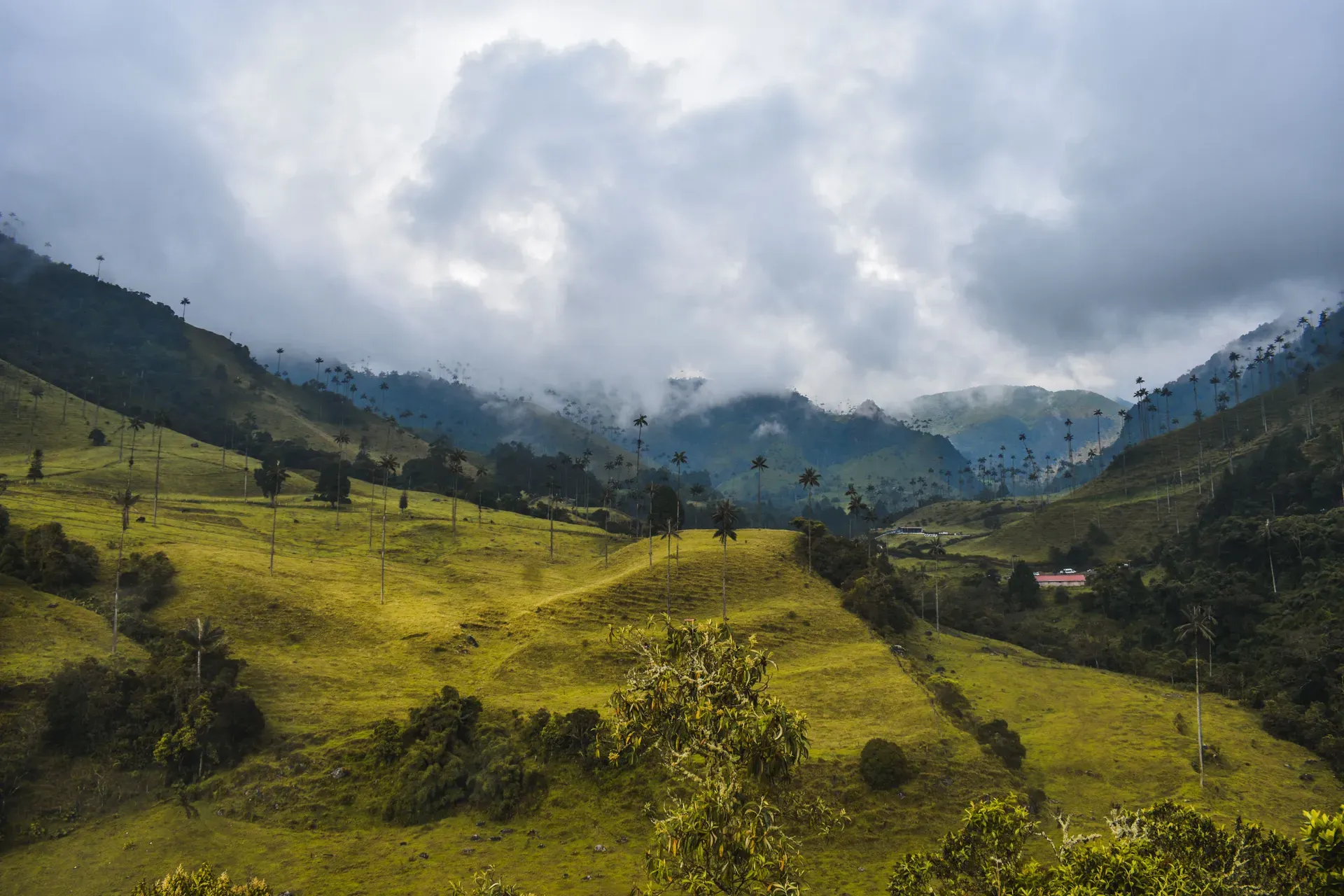
Cocora Valley sits between 1,800 and 2,400 meters in Colombia's Central Cordillera, anchoring the Los Nevados National Natural Park. Thousands of 60-meter Quindío wax palms pierce the low-hanging cloud forest mist along the Quindío River.
Sixty-meter Quindío wax palms dominate the skyline of the Cocora Valley. This mountain corridor occupies the upper reaches of the Quindío River in Colombia's Central Cordillera, functioning as the primary entry point to the 58,000-hectare Los Nevados National Natural Park. Elevations shift drastically across the landscape, starting at 1,800 meters near the valley floor and climbing to 2,400 meters along the forested ridges. Low-hanging clouds frequently trap moisture against the steep Andean slopes, sustaining dense cloud forests and expansive green meadows that characterize the country's coffee-growing region.
Visitors access the trailheads by riding 11 kilometers from the neighboring town of Salento. Travelers often stand on the rear bumpers of WWII-era Willy jeeps as the vehicles navigate the winding mountain roads. The full hiking loop takes five to six hours, cutting through muddy terrain and crossing the rushing river over eight narrow, rickety suspension bridges. Hikers navigate wet logs and steep 50-meter descents that regularly turn into hazardous mudslides after heavy rain. A shorter, direct walk to the main palm viewpoints takes just 30 minutes for those avoiding the strenuous circuit.
Protection of this ecosystem falls under strict national law. The valley serves as a crucial ecological corridor, safeguarding the habitat of the mountain tapir, spectacled bear, and Andean condor. Entrance requires cash payments at multiple private boundaries, costing COP 20,000 for the main palm area and up to COP 53,000 for the complete circuit. The gates open daily from 7:00 AM to 6:00 PM, with early arrivals offering the best chance to avoid the heavy afternoon fog that completely obscures the mountain views. Families frequently visit with young children, opting for horseback riding tours to navigate the trails without physical exhaustion.
The dry seasons, running from December to February and July to September, provide the safest hiking conditions. Outside these windows, frequent heavy rainfall severely degrades the trails. Visitors must rent rubber wellington boots in Salento to navigate the deep mud. Drones and single-use plastics are strictly prohibited at the trailheads to protect the fragile flora. The valley lacks paved ramps or specialized paths, making the rugged terrain inaccessible for wheelchairs, though elderly visitors can view the palms from flat areas near the main parking lot.
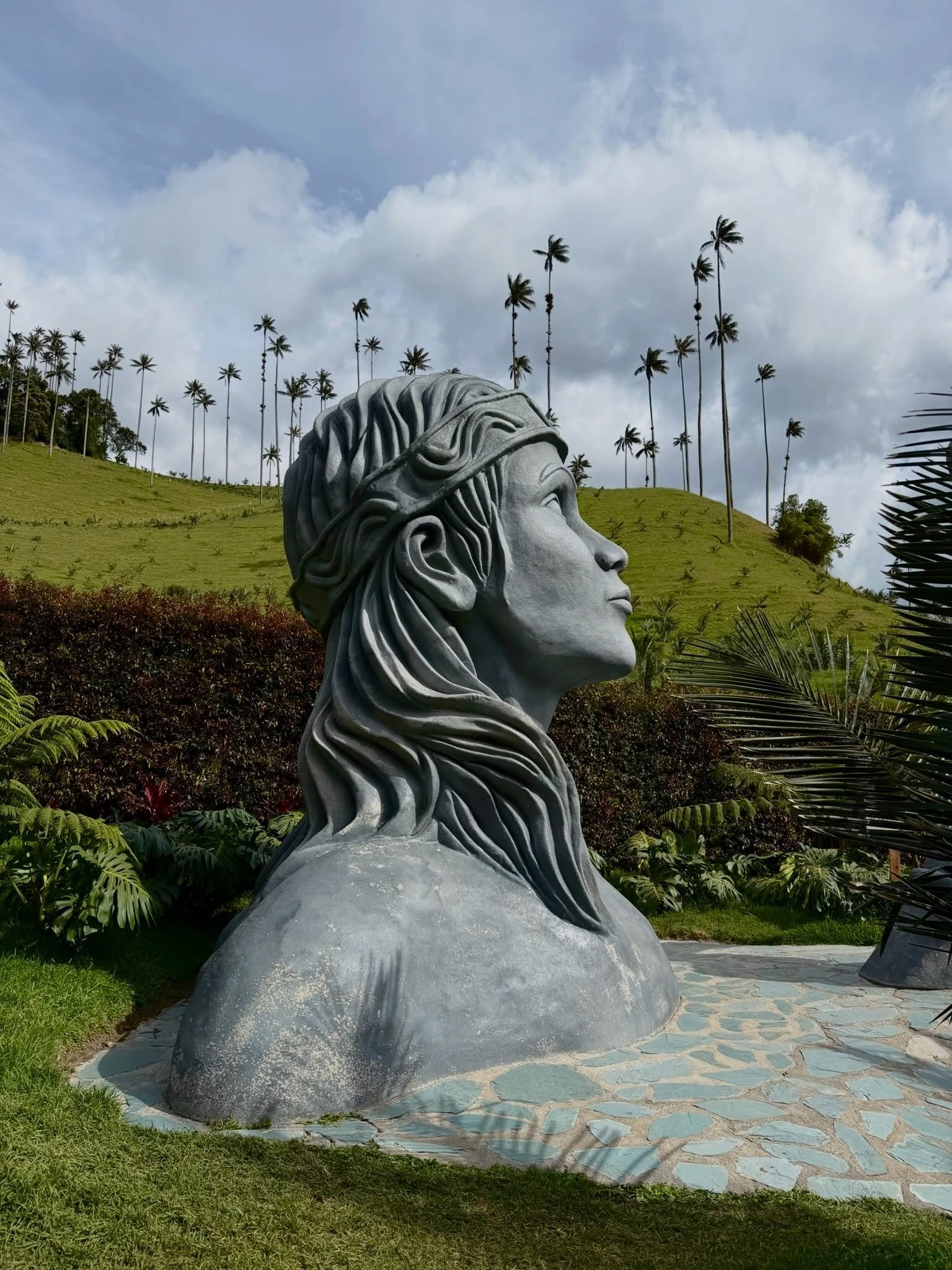
The name "Cocora" translates to "star of water" in Spanish. Local Quimbayan indigenous groups originally inhabited the region, and the valley takes its title directly from a Quimbayan princess, the daughter of the local chief Acaime. European settlement in the immediate vicinity began in 1842 with the founding of Boquía. This initial settlement functioned as a penal colony and a vital waystation along the Quindío trail, a major trade route through the Andes. Flooding from the Quindío River and extreme geographic isolation forced the settlers to move further up the mountain in 1865, establishing the modern town of Salento. This relocation made Salento the oldest permanent settlement in the Quindío department, deeply rooting the area in the 19th-century coffee boom.
During the 20th century, the Quindío wax palm faced severe threats from agricultural expansion and religious traditions. Locals routinely cut down the young palms to use their fronds for Palm Sunday celebrations. Farmers simultaneously cleared the surrounding cloud forests to create open cattle pastures, destroying the protective canopy that young palms require to survive their fragile early years. The slow-growing nature of the species meant these combined pressures devastated the population. By the early 1980s, the towering trees were nearing extinction in their native habitat, prompting urgent calls for conservation.
President Belisario Betancur intervened directly to halt the destruction. The Colombian government drafted legislation to create a wildlife sanctuary specifically designed to save the palm. On September 16, 1985, Congress ratified Law 61. This decree officially declared the Quindío wax palm the national symbol of Colombia and strictly prohibited its logging, damage, or exploitation. The legislation simultaneously incorporated the 58,000 hectares of the Cocora Valley and surrounding peaks into the newly expanded Los Nevados National Natural Park. Law 61 also mandated the creation of educational programs to teach Colombians about the ecological value of the wax palm. Schools across the Quindío department incorporated the valley's history into their curriculums, ensuring the next generation understood the trade-offs between agricultural profit and environmental stewardship.
Today, the valley operates under strict environmental regulations enforced by park authorities. Visitors caught littering or damaging the flora face immediate fines. The surrounding region gained further recognition in 2011 when UNESCO inscribed it as part of the Coffee Cultural Landscape of Colombia. While the palms in the main valley are aging and slowly dying out due to the lack of forest canopy, conservationists now focus on protecting the denser, untouched palm forests in the nearby La Carbonera sector.
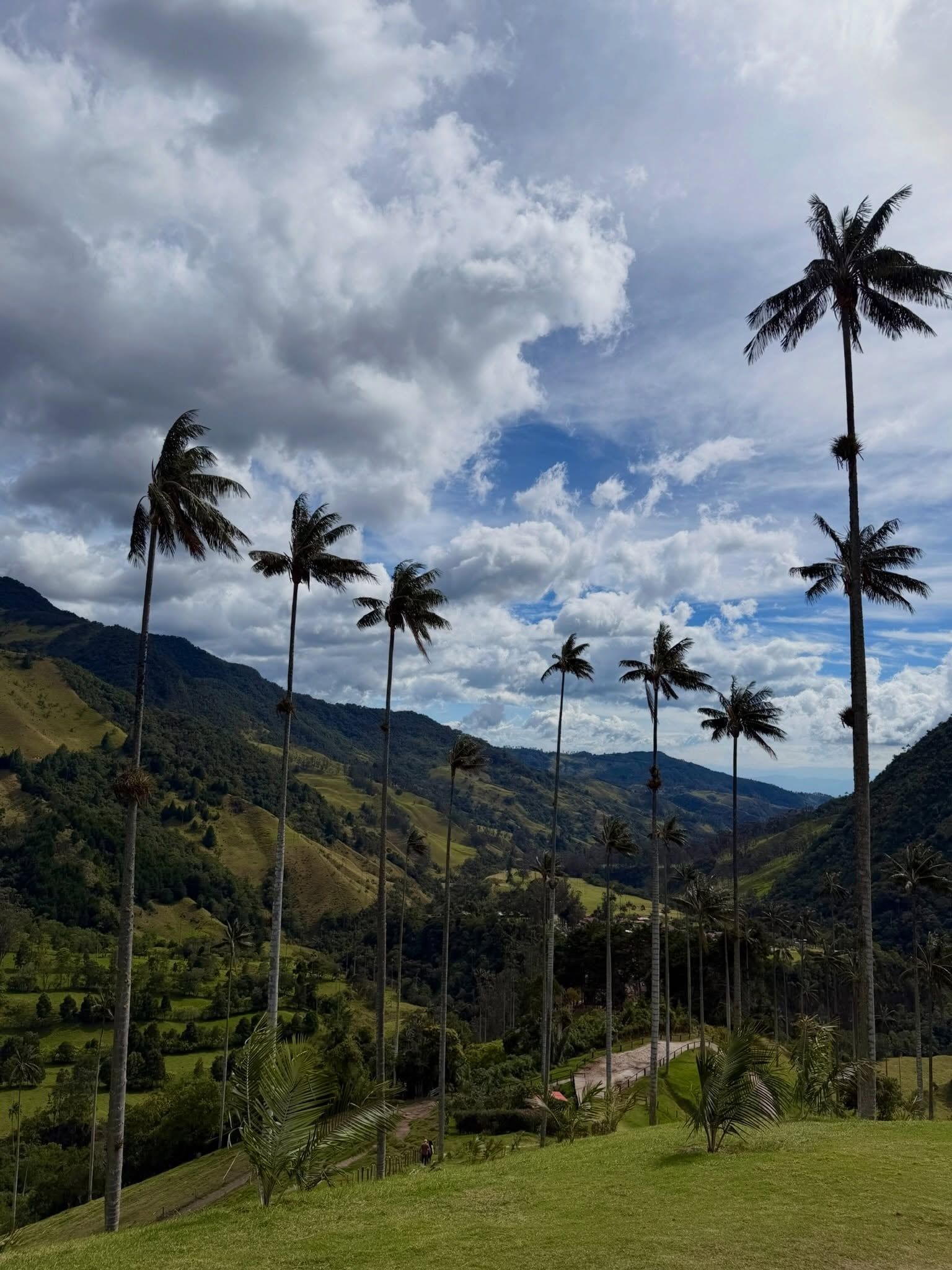
The Quindío wax palm (Ceroxylon quindiuense) defines the physical landscape of the valley. These trees grow up to 60 meters tall, making them the tallest palm species on Earth. Their smooth, cylindrical trunks are coated in a thick layer of natural wax, which historically provided material for candles and matches before the introduction of electricity. The palms lack lower branches, featuring a single cluster of green fronds at the absolute peak. They thrive exclusively at high altitudes between 1,800 and 2,400 meters, defying the typical tropical, sea-level habitat of most global palm species.
Steep, vertical mountains enclose the valley floor. The Quindío River cuts directly through the center, carving a gorge filled with dense cloud forest vegetation. Mist rolls in predictably by early afternoon, dropping visibility to a few meters and coating the broadleaf plants in heavy condensation. The terrain transitions rapidly from flat, open cattle pastures at the base to thick, tangled jungle canopies near the 2,400-meter mark. Parts of the hiking trail ascend to nearly 3,000 meters above sea level, exposing hikers to thin mountain air and rapid temperature drops.
Hikers attempting the full Cocora loop encounter eight wooden suspension bridges. These narrow crossings consist of wooden planks and wet logs suspended by steel cables directly over the rushing river. Park signs mandate that visitors cross these rickety structures one person at a time to prevent collapse. The steep 50-meter descent after the fourth suspension bridge presents the most challenging physical obstacle. Hikers rely on trekking poles and exposed tree roots to maintain balance in the deep mud. The contrast between the dark, enclosed jungle of this section and the bright, open meadows of the palm forest highlights the extreme biodiversity packed into a single mountain corridor.
Beyond the main valley, the La Carbonera sector holds Colombia's largest concentration of wax palms. This secondary area contains tens of thousands of trees growing naturally without human intervention or cleared pastures. Unlike the isolated trees in the main valley, the palms in La Carbonera grow densely packed together within a protective forest canopy. This sector showcases the ecosystem in its original, pristine state, offering a sharp contrast to the heavily trafficked tourist trails.
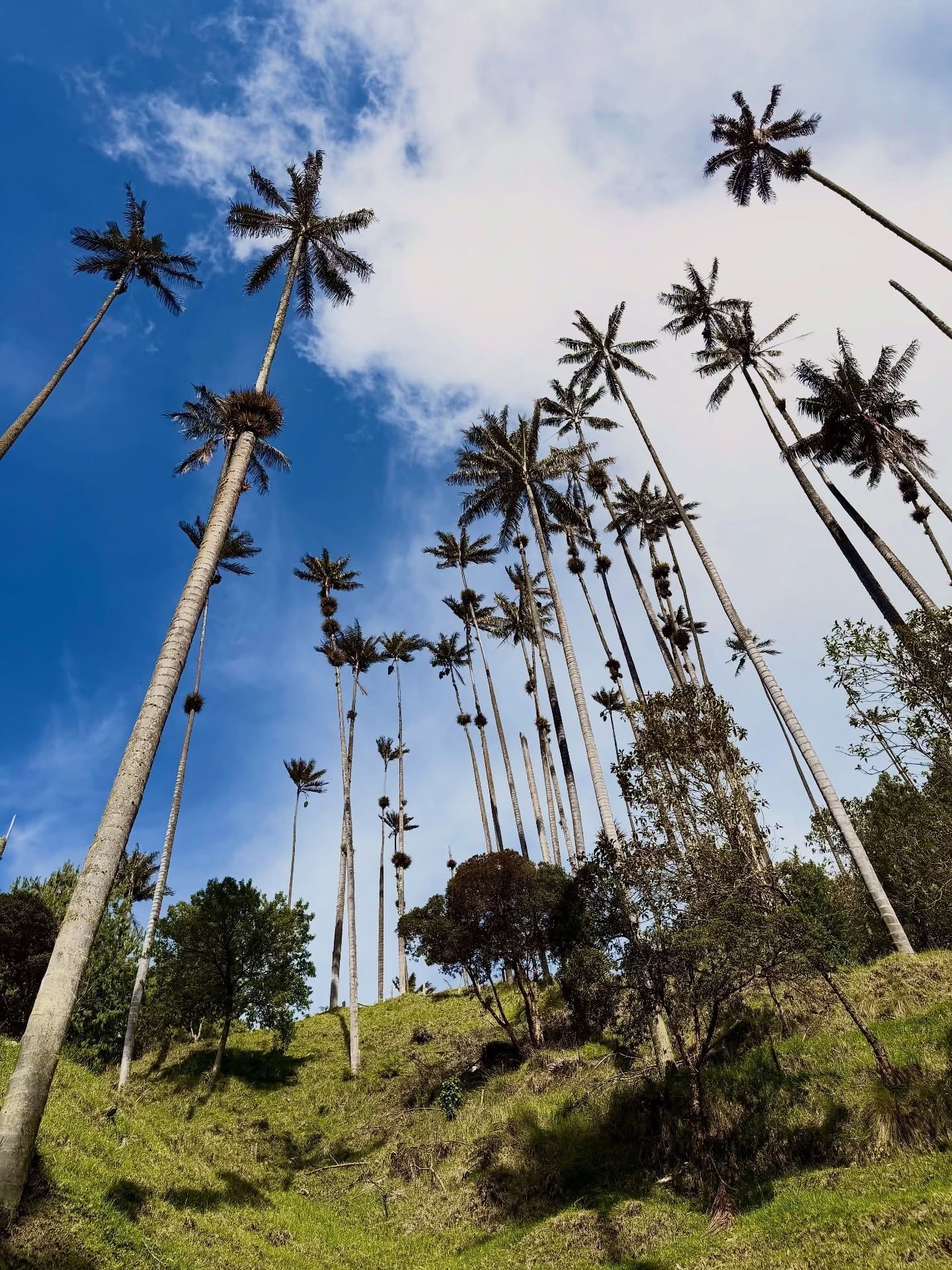
The Quindío wax palm stands as the official national symbol of Colombia. Its image appears on the country's currency, passports, and government seals, representing the endurance of the high Andean ecosystems. The valley itself anchors the UNESCO World Heritage-listed Coffee Cultural Landscape, illustrating a century-old tradition of high-altitude agriculture adapting to rugged mountain terrain. The preservation of this specific valley sparked the broader environmental movement in Colombia during the 1980s, shifting national priorities from agricultural expansion to ecological conservation. The strict ban on harvesting palm fronds for Palm Sunday forced local Catholic parishes to adapt their century-old religious practices. Priests now distribute alternative plant species or woven synthetic branches during Holy Week, demonstrating a successful compromise between deeply held religious traditions and urgent environmental necessities.
Local identity in the Quindío department revolves entirely around the valley's preservation and tourism. The nearby town of Salento relies heavily on the ecosystem, with generations of families transitioning from cattle ranching to operating Willy jeeps and guiding hikes. These WWII-era vehicles, originally imported for coffee transport, are now cultural icons of the region. Drivers meticulously maintain the bright paint jobs and original engines, loading up to 14 passengers at a time for the 30-minute ride up the mountain.
Restaurants in the hamlet of Cocora maintain regional culinary traditions, specifically the preparation of farm-raised freshwater trout. Cooks bake the fish in rich garlic or cheese sauces and serve it alongside massive patacones. These fried green plantains are pounded flat to the size of a dinner plate, providing a carbohydrate-heavy meal designed to refuel hikers after a five-hour trek. The Bosques de Cocora restaurant serves hundreds of these traditional plates daily to visitors finishing the trail.
The Acaime Nature Reserve, located 20 minutes off the main trail, preserves the indigenous naming heritage. Named after the Quimbayan chief, the sanctuary maintains feeding stations that attract eight distinct species of hummingbirds. Visitors participate in a regional custom here, drinking hot sugar cane water paired with a thick slice of local cheese. This specific combination of sweet liquid and salty dairy is a staple comfort food across the Colombian Andes, providing immediate warmth and energy in the cold cloud forest.
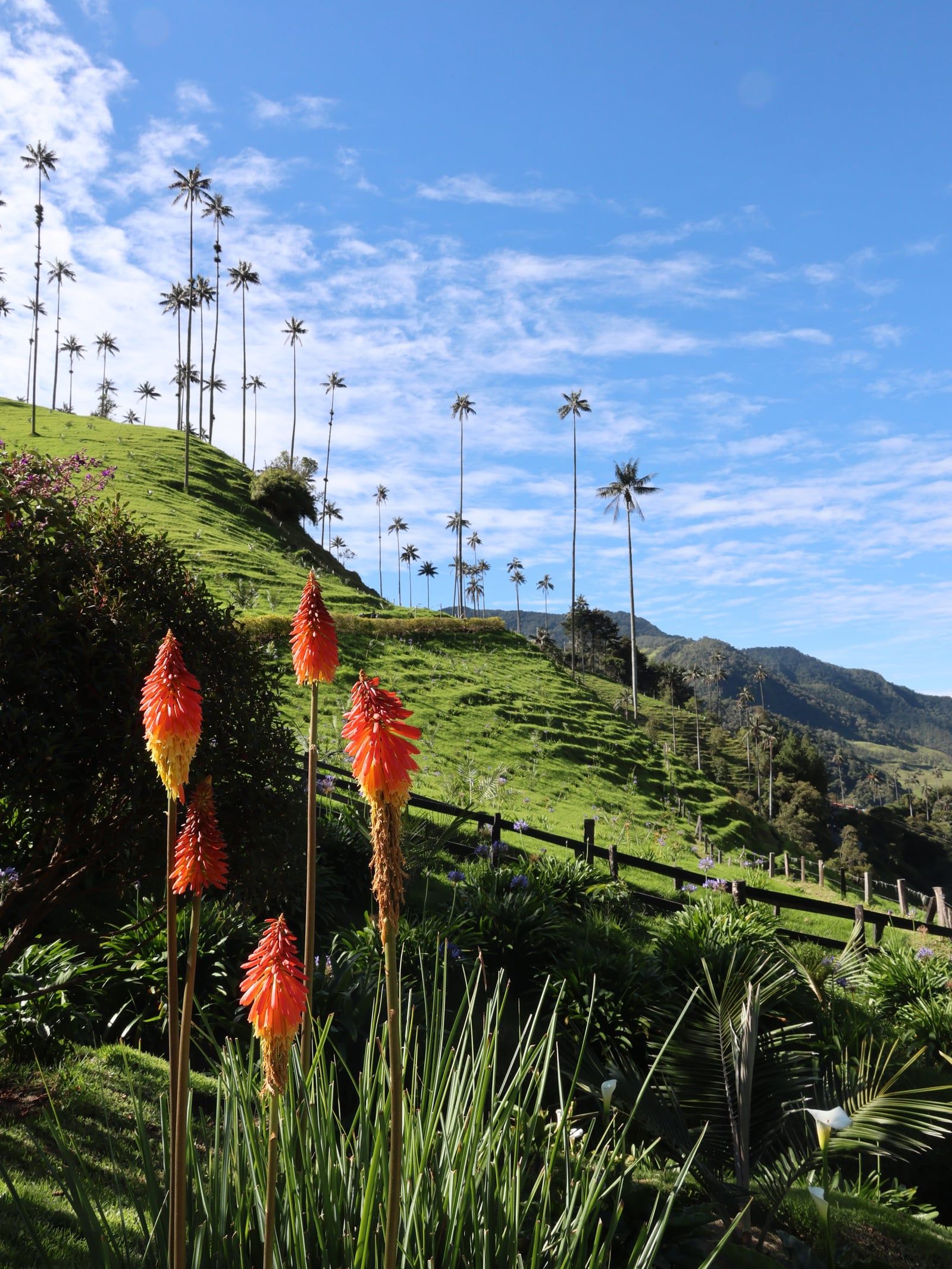
The Quindío wax palm grows up to 60 meters high, defying the typical sea-level habitat of most global palm species.
The smooth, cylindrical trunks are covered in a thick layer of natural wax that locals historically used to manufacture matches and candles.
The name Cocora translates to 'star of water' in Spanish and honors a Quimbayan princess who was the daughter of chief Acaime.
Travelers reach the trailheads by riding 11 kilometers from Salento, often standing on the rear bumpers of WWII-era Willy jeeps.
Hikers completing the full loop must navigate eight narrow suspension bridges made of wooden planks and wet logs over the Quindío River.
The Colombian government passed Law 61 in 1985, making it strictly illegal to cut down or exploit the wax palms.
The Acaime Nature Reserve sits 20 minutes off the main trail and maintains feeding stations that attract eight distinct species of hummingbirds.
The entry fee to the main palm area is COP 20,000 per person. Hikers completing the full loop pay an additional COP 6,000 to COP 10,000 at a second station to cross private land boundaries.
Shared Willy jeeps depart from the main square in Salento starting at 7:00 AM. The 11-kilometer ride takes 30 minutes and costs between COP 3,600 and COP 5,900 one-way.
The complete circuit takes five to six hours and covers steep, muddy terrain. Visitors seeking a shorter trip can walk directly to the main palm viewpoints and back in 30 minutes.
Yes. The Acaime Natural Reserve sits a short distance off the main trail and hosts up to eight species of hummingbirds. The COP 5,000 entry fee includes a hot drink and a slice of cheese.
The tree is the national symbol of Colombia and the tallest palm species globally. The government protected it under Law 61 of 1985 to prevent extinction from agricultural and religious harvesting.
You can skip the strenuous five-hour loop entirely. A flat, 15-minute path leads directly from the parking lot to the primary palm viewpoints without requiring any steep climbing.
Wear sturdy hiking boots or rent rubber wellington boots to handle deep mud. Pack a rain poncho, a warm jacket for cold mountain air, and at least two liters of water.
Trail signs are minimal and some hikers lose their way. Stay on the marked paths and avoid veering onto side trails leading toward La Estrella or the deeper national park.
Countryside restaurants serve fresh, farm-raised trout baked in various sauces. The dish comes with giant patacones, which are crispy, fried green plantain fritters.
The dry seasons from December to February and July to September offer the clearest views and firmest trails. Outside these months, heavy rain turns steep descents into hazardous mudslides.
Browse verified tours with free cancellation and instant confirmation.
Find Tours